The video file “Checon Ramirez.hd_2.mp4” captures a close-up, overhead shot of fresh raw meat resting on a food preparation surface. In the center of the frame, a large, rectangular block of ground meat sits neatly inside a white styrofoam tray. This ground meat displays a bright, vibrant pinkish-red color typical of freshly processed beef or pork. The intricate texture of the ground meat is distinctly formed by numerous small, extruded strands packed closely together. To the left of the white tray, another portion of raw meat is visible on a patterned cloth or wrapper. This second portion of meat appears noticeably darker, with a deep red and slightly purplish hue. It looks much more irregular in shape compared to the neatly pressed block sitting in the white tray.
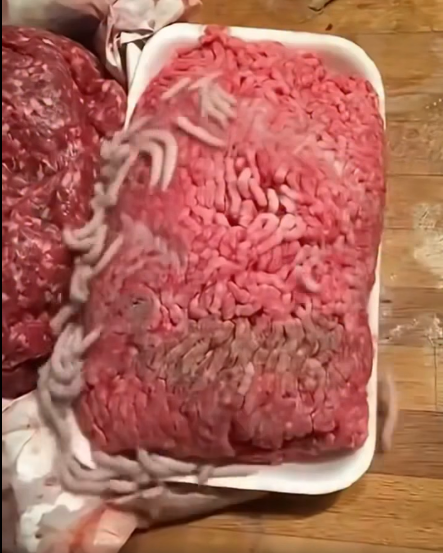
The entire scene is set on a light-colored wooden cutting board or kitchen tabletop. This wooden surface shows distinct parallel grain lines running vertically in the background of the frame. The lighting on the food items is bright, direct, and slightly warm, emphasizing the detailed surface textures. In the very first second of the video, several long, thin, worm-like strands appear to be writhing on the meat. These thin, pale pink strands move actively near the top-left and bottom corners of the white tray. They seem to crawl or slide unsettlingly along the outer edges of the packaged ground meat. Upon closer inspection, these moving strands match the color and texture of the ground meat perfectly.
This perfect visual match strongly suggests that the movement might be a clever digital illusion or a trick of the footage. The strands do not look like typical organic parasites due to their identical color and thickness to the beef strands. In the next frame, a person’s hand briefly enters from the bottom-left corner of the video. The hand interacts slightly with the cloth wrapper or the darker meat on the left side. As the hand moves, the writhing strands on the right side suddenly vanish completely from sight. The rest of the ground meat in the white tray remains completely still, stable, and undisturbed.
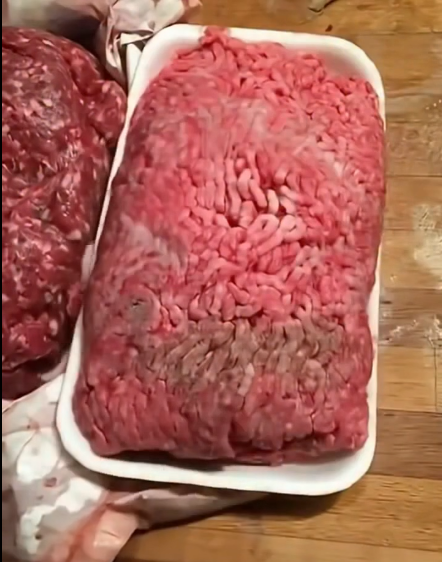
This sudden, magical disappearance indicates that the moving effect was likely caused by a digital filter or application. Alternatively, it could be a specialized video effect applied to make the food look alive or moving for shock value. The video remains focused on the static meat items for the remaining duration of the clip. The bright pink color on top of the ground meat contrasts with a darker patch near the center. This slightly brown or grey patch at the bottom of the block indicates normal oxidation of the meat. Oxidation occurs naturally when raw ground meat is exposed to the oxygen in the air over time.
The white styrofoam tray has a clean rectangular shape with smoothly rounded corners. The cloth underneath the left portion of meat has a white base with faint, faded red patterns. The camera angle is positioned directly overhead, looking straight down at the food preparation area. The camera stays mostly stationary throughout the short five-second clip, without tilting or panning. The video has a slightly grainy digital quality, which is common for casual smartphone recordings. There are no clear sounds, music, or voices audible in the background of this short video.
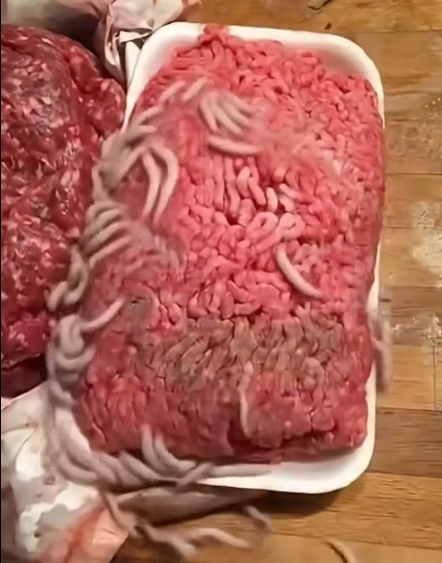
The overall presentation creates a slightly unsettling, creepy, or shocking feeling during the first second. This initial shock value is likely the main creative purpose behind the creation of the video. It effectively plays on common public fears regarding food safety and contamination in raw meat products. The visual texture of the ground meat strands creates an intricate, highly repetitive pattern on the surface. The wooden cutting board shows some minor signs of wear and tear from regular kitchen use over time.
The overhead lighting casts soft, subtle shadows along the right edge of the white styrofoam container. The hand that appears on the left is only visible for a mere fraction of a second. It quickly withdraws from the frame, leaving the focus entirely back on the two piles of raw meat. The color gradient of the main meat block shifts naturally from a vibrant pink to a deeper red. This variation in color is normal for ground meat mixtures containing different fat-to-lean ratios. The video does not show any other kitchen utensils like knives, forks, or plates nearby.
The composition of the shot beautifully splits the view between the two different types of raw meat. The looping format of the video causes the creepy crawling effect to repeat continuously at the start. This repetition allows viewers to analyze the strange movement more closely upon multiple viewings. The identical color of the moving strands confirms they are likely digitally animated meat strands. It clearly demonstrates how easily digital video editing can create convincing and disturbing visual illusions. The clip ends quietly with the raw meat sitting harmlessly on the wooden kitchen counter. The final frame remains completely still, showing no further movement or changes in the food.